
Guidewire Claim Insights in Databricks and Tableau - How many claims are there?

 In this blog post, sharing guidewire claims how many claims got created per city  and per state basics


Databricks it is available here : Claim happened from most US State Insights data analytics Template V1.0 - Databricks


SQL Sample code 

select
AX.CITY,
count(AX.CLAIM_NUMBER) as TOTAL_CLAIMS_PER_CITY
from
(select distinct
C.CLAIMNUMBER as CLAIM_NUMBER,
ST.NAME as STATE,
ADDR.CITY
from
guidewire_raw_db.cc_claim C
left join guidewire_raw_db.cc_contact CONT on C.INSUREDDENORMID = CONT.ID
left join guidewire_raw_db.cc_address ADDR on CONT.PRIMARYADDRESSID = ADDR.ID
left join guidewire_raw_db.cctl_state ST on ADDR.STATE = ST.ID ) AX
group by AX.CITY
order by 2 desc

From these SQL Query Resultsets Feed into Tableau Public Edition


This Tableau Public view Available here 
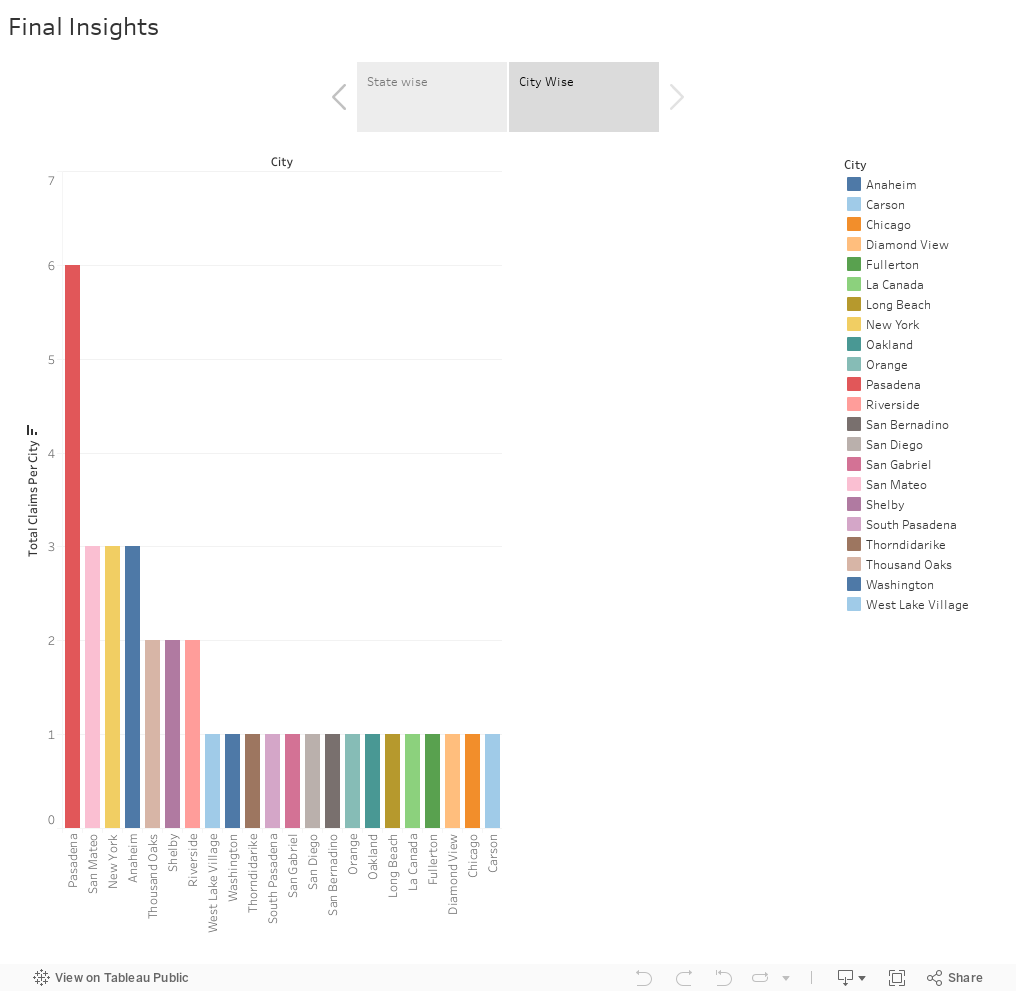
https://public.tableau.com/views/Guidewire_Insurance_Claims_Insights_one/InsuranceClaimsPerCity?:language=en-US&:sid=&:redirect=auth&:display_count=n&:origin=viz_share_link


Comments

Popular posts from this blog

Guidewire Rating detailed explanations

Guidewire Rating is a critical component of Guidewire PolicyCenter that handles the calculation of insurance premiums based on various factors, such as risk characteristics, coverage options, and discounts. Here's a detailed explanation of how Guidewire Rating works, its components, and how it can be configured and extended. 1. Overview of Guidewire Rating Guidewire Rating is responsible for determining the price of an insurance policy by applying rating logic, rules, and algorithms to the insured's data. The rating process involves evaluating factors like the type of coverage, the insured risk (e.g., the driver’s record, vehicle type in auto insurance), and the chosen limits and deductibles. The output is a premium amount that the policyholder must pay. 2. Key Components of Guidewire Rating a. Rating Engine The Rating Engine is the core system within PolicyCenter that processes rating inputs and outputs premium calculations. It interprets rating formulas, applies them to speci...

JSP and Servlet Form Submission without page refresh show results on the same page using Jquery AJAX

Code Snippet HTML Form  <form id='ajaxform' name='ajaxform' action='ajaxformexample' method='post'>  First Name: <input type='text' id='firstname' name='firstname' size='30' required/><br/>  Last Name: <input type='text' id='lastname' name='lastname' size='30'required/><br/>  Email:  <input type='email' id='emailid' name='emailid' size='30'required/><br/>  Password:  <input type='password' id='pwd' name='pwd' size='30'required/><br/>  <input type='Submit'/>   <div id='content'> </div> </form> the above HTML Form uses post method and url servlet redirect to " ajaxformexample " Javascript Code  var form = $('#ajaxform'); // id of form tag  form.submit(function () {  $.ajax({  ...

Login and Registration forms in C# windows application with Back end Microsoft SQL Server for data access

In this article, I'm gonna share about how to make login and register form with MS SQL database; 1. Flow Chart Logic 2. Normal Features 3. Form Designs Login Form Design Sign in Form Design Password Retrieve Form 4. Database Design and SQL queries and Stored Procedure Create new Database as "schooldata" create table registerdata (  ID int identity,  Username nvarchar(100),  Password nvarchar(100),  Fullname  nvarchar(100),  MobileNO nvarchar(100),  EmailID nvarchar(100)  ) select * from registerdata create procedure regis (  @Username as nvarchar(100),  @Password as nvarchar(100),  @Fullname as nvarchar(100),  @MobileNO as nvarchar(100),  @EmailID as nvarchar(100)  ) as begin insert into registerdata (Username, Password, Fullname, MobileNO,EmailID) values (@Username, @Password, @Fullname, @MobileNO, @EmailID) ...